
The Game Roster Construction
Minimum Viable Production
Where is your production actually coming from? Stop counting scorers. Start counting pathways. 🏀

Every coach in this business has had the conversation. You look at your returning group, you see two kids who can get you 17-18 a night, and you do the math on the whiteboard:
17.5 + 17.5 = 35. We need 60. Where’s the other 25 coming from?
That’s the right first question. It’s the wrong last one.
I’ve spent 20+ years evaluating players — on the recruiting trail, in film rooms, on grassroots sidelines. The most common roster-construction mistake I see at the high school and travel level isn’t a talent problem. It’s an accounting problem. Programs count points. They don’t count where the points come from — or what’s left when that source gets taken away.
I’m calling this framework Minimum Viable Production. Before we go any further, here’s what it is and what it isn’t.
⚠️ Ground rules:
- Every roster number in this piece is a hypothetical accounting exercise. Not a real team. Not a national benchmark. Not a forecast.
- This is a coaching framework, not a validated predictive model. Nobody — me included — has proven it predicts wins once you control for talent.
- What it will do is force better conversations in your staff room, your practice plan, and your recruiting board.
Here’s the definition I’m working from:
Roster resilience = the capacity to preserve competitive two-way performance when your normal contributors, mechanisms, or lineups become less effective or unavailable.
Two-way. Not “can we still get to 60.” Can we still compete.
📊 60 Is Not a Number. It’s a Question.
Let’s kill the universal points target right now.
Sixty points in a 60-possession game is a 100 offensive rating — that’s solid offense. Sixty in a 72-possession game? You left possessions on the floor. Points per game can’t tell those two nights apart. Points per possession can.
The math that belongs on the whiteboard:
Expected margin ≈ (Possessions ÷ 100) × (Offensive Rating − Defensive Rating)
- 60 possessions, ORtg 100, DRtg 95 → +3
- Same offense vs. an opponent projected to score 105 per 100 → −3
Same 60 points. One’s a win, one’s a loss. And that’s an accounting approximation, not a win-probability model — but it’s a lot closer to the truth than “get to 60.”
So Minimum Viable Production doesn’t mean 60. It means the competitive profile this team has to produce — against this opponent, at this pace, with these available players. Less convenient than one number on the board. A lot more honest.
Every staff should be separating four planning questions:
- ✅ Average opponent: Can we compete with the typical team in our league or conference?
- ✅ Strong opponent: Can we compete against their specific strengths?
- ✅ Championship: Can we hold up across a postseason bracket and back-to-back games?
- ✅ Bad shooting night: Can ball security, foul pressure, rebounding, and defense carry us when nothing falls?
📌 Scouting note: “Can we score enough?” and “Can we outscore them?” are different questions. A team can reliably hit its offensive target and still reliably give up more.
🧮 Count Opportunities Before You Count Points
The missing 25 has to fit inside a shot budget — and that budget is smaller than most staffs think.
Back to our two scorers. Each one, hypothetically:
| Opportunity | Assumption | Points |
|---|---|---|
| 10 two-point attempts | 50% | 10 |
| 4 three-point attempts | 33% | 4 |
| 5 free throws | 70% | 3.5 |
| Total: 14 FGA + 5 FTA | 17.5 |
Together that’s 28 shots and 10 free throws. In an illustrative 64-possession game with a 50-FGA, 18-FTA team budget, the supporting cast gets 22 FGA, 8 FTA, and 100 player-minutes to find 25 points.
That’s the real constraint. The 25 has to fit inside 22 shots.
And this is where the recruiting conversation gets exposed. That transfer who “averaged 18 at her old school” doesn’t bring 18 with her. She brings a skill set into a smaller shot budget, new teammates, new matchups, maybe more defensive responsibility. Research on teammate effects backs it up: production doesn’t travel as cleanly as the box score suggests.
You’re not stacking averages. You’re allocating minutes, touches, decisions, and responsibilities among players who have to function together.
Three ways to find the 25 — all hypothetical, all inside the same budget:
- 🎯 Build A — Third scorer: One wing gets 12 on 9 FGA. Everybody else spaces, cuts, screens, rebounds, and takes care of the ball.
- 🔁 Build B — Four threats: Two supporting players get 10 apiece on about 8 FGA each. Four double-figure scorers on paper.
- 🧱 Build C — Complementary routes: A post supplies rim and paint scoring, a wing mixes cuts and threes, a connector handles secondary organization, and the bench chips in modest offense with defensive and rebounding value.
All three add up. None of them proves those role efficiencies survive once a player is recruited, promoted, or handed more usage. That’s the next test.
🚨 Four Scorers ≠ Four Creators
Build B looks safer on paper. Four double-figure scorers. Might be.
Now ask where those four get their shots.
If three of them need the same guard to beat pressure and touch the paint, you didn’t build four pathways. You built one pathway with four finishers. The scoring is distributed. The creation isn’t.
Take that guard out and your “depth” disappears — because the remaining scorers are suddenly being asked to do a different job.
The variance math says the same thing. Spreading points across more players doesn’t automatically make you more consistent. If those scorers all feed off the same creator or the same shot type, they go cold together. Balanced box scores can hide a single point of failure.
Here’s the scouting lens I use. A fallback only counts if it passes all three checks:
- 👤 Contributor: Can someone else do this job at real volume? (“She scored 10 once” doesn’t count.)
- ⚙️ Mechanism: Can production come from a different method? (Swapping one stationary shooter for another isn’t a new mechanism.)
- 5️⃣ Lineup: Can a different five-player unit compete on both ends? (Five productive individuals ≠ a playable unit.)
And two “fallbacks” that run through the same initiator aren’t independent. When she gets denied, they both die.
Track every real pathway the way you’d chart a set: initiator, action, finishers, lineup, opponent condition, cost, and evidence. If you can’t fill in the evidence column, it’s a hope — not a pathway.
⭐ Star Dependence Isn’t the Problem. Fragile Star Dependence Is.
Let me be clear: this is not an anti-star argument.
An exceptional creator may be the most valuable piece you have. Putting the ball in her hands and building around her can be the smartest use of your roster. The research on player complementarity says the same thing in academic language — evaluate the surrounding pieces by how their skills fit, not by whether their scoring averages look equally pretty.
✅ Productive star dependence looks like this:
- A low-usage wing who spaces the floor so the star can attack
- A post who creates value through screens, finishing, and defensive coverage
- A second handler who keeps the star from solving every possession from the backcourt
- Workable answers when the defense adjusts
❌ Fragile star dependence looks like this: contain the star and you lose a lot more than her points. Teammates lose their shot supply. The offense loses its organization. Every replacement lineup opens a new hole.
The scout’s test:
- Can you punish the trap?
- Can someone else run a possession?
- Can the star score off the ball?
- Is there a lineup that adds creation without giving it all back on defense?
The goal isn’t to eliminate dependence. It’s to understand what the concentration enables — and what its disruption destroys.
📉 When Your Star Scores 8
None of the three builds gets back to 60 when the star has an off night — and that’s the framework doing its job, not failing.
The hypothetical star projected for 17.5 scores 8 tonight. The instinct is “somebody find me 9.5.” Hold on. What happened to her possessions?
- 🥶 Cold at the same volume: She still took 14 shots and 5 free throws and scored 8. Those possessions are spent. The team drops from 60 to 50.5 before anything else changes. No free shots fall to teammates.
- 🔄 Fewer attempts: She scores 8 on 8 FGA and 3 FTA. Now 6 FGA and 2 FTA can move to someone else — without growing the team’s budget.
In the second case, here’s what each build recovers (assumed marginal efficiencies at the bigger workload, not the players’ prior averages):
| Build | Who absorbs it | Points recovered | Revised total |
|---|---|---|---|
| 🔁 B — Four threats | Two secondary scorers share 6 FGA at 1.0 pts/shot, 2 FTA at 75% | 7.5 | 58.0 |
| 🧱 C — Complementary | Interior and cutting offense, 0.9 pts/shot, 60% FT | 6.6 | 57.1 |
| 🎯 A — Third scorer | The third scorer takes 6 more FGA at 0.8 pts/shot, 2 FTA at 60% | 6.0 | 56.5 |
📌 Build B wins this exercise only because we assumed better replacement efficiency. Four scorers don’t mathematically guarantee anything.
And Build C’s 57.1 might be the best answer of the three — if its defensive adjustment holds the opponent to 54. If the opponent still projects to 62, the same offensive response isn’t enough. Two-way, every time.
What if she doesn’t play at all?
The baseline drops to 42.5, not 60. Reassign all 14 FGA and 5 FTA at an assumed 0.75 points per shot and 60% from the line, and you get back 13.5 — 56 total.
Then the minutes have to go somewhere. In Build B, her 30 minutes might split +4, +4, +6, +8, +8 across the rotation to keep 160 total player-minutes.
That accounting doesn’t prove those players can handle pressure, defend the matchup, or hold that efficiency. Those are the next tests — and most staffs never run them.
🔄 The Rest of Production: Four Factors, Defense, and Depth
Points are the output. Shooting, turnovers, rebounding, free throws, and defense are the production — and they interact, so none of them works as a standalone quota.
Surviving a cold night takes capabilities, not slogans
When shots aren’t falling, you have three levers:
- 🔒 Take care of the ball → more shot attempts
- 💪 Crash the offensive glass → extended possessions
- 🎯 Get to the line → points without making a field goal
Each lever needs real personnel. You can’t decide to be an offensive-rebounding team without players who can reach and secure misses. You can’t decide to attack the rim without handling, spacing, and finishing.
“Get more second chances” is an instruction. “This lineup can recover misses without giving up runouts” is a roster claim you can test.
Quick sensitivity check on a shooting-dependent build: 30 threes at 33% gets you to 60 in our hypothetical. Drop that to 20% with everything else fixed, and you’re at 48. That’s before counting the long rebounds and transition chances all those misses create for the other team.
🛡️ Defense is part of the requirement
Women’s Olympic research covering 2004-2016 (156 games) found that shooting and defensive indicators both separated winners from losers. Offense is not the whole production problem.
A defensive possession isn’t done until the ball is secured. A great contest followed by an opponent offensive rebound? Job not finished. The credit belongs to the on-ball containment, the help rotation, and the wing who completed the box-out — not just the kid credited with the board. Those jobs belong on your coverage map even if they never show up in a stat line.
🪑 Depth has to be playable
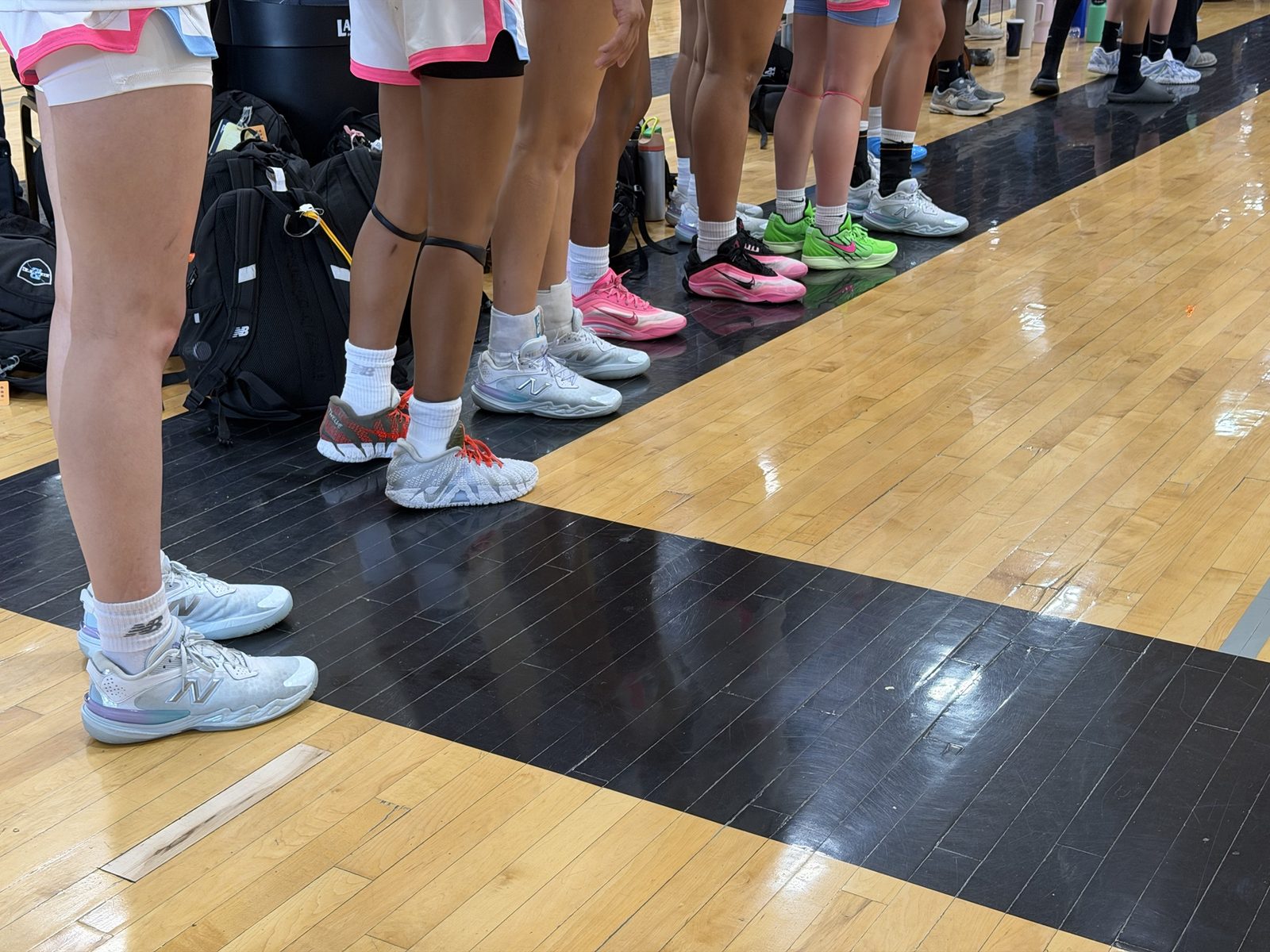
Depth isn’t how many names are on your roster. It’s how many combinations can do the job.
- A bench guard who scores but can’t handle pressure ≠ a backup organizer
- A rebounder who kills your spacing solves one problem and creates another
- A scorer who can’t stay on the floor defensively ≠ a late-game option
And be careful with bench scoring as a depth stat. In EuroBasket Women 2017 (all 40 games), bench scoring’s relationship to winning depended on whether the game was close or a blowout. Garbage-time points inflate a lot of “deep” rosters.
Functional depth needs three things: a lineup, an assignment, and evidence. Without those, “deep” describes your roster’s length — not its competitive capacity.
🧪 Practice the Second Plan
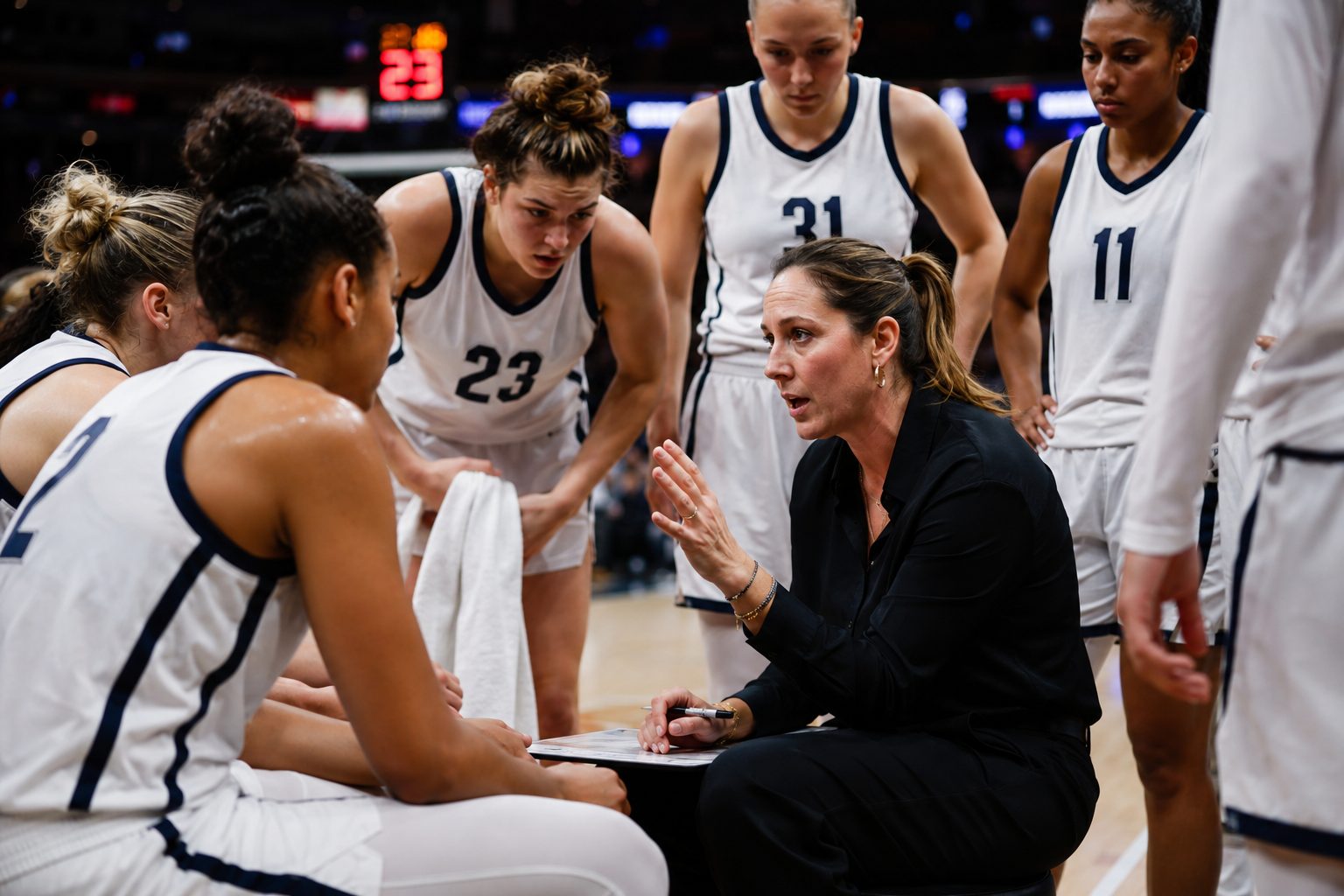
A fallback that only exists in a staff meeting isn’t a pathway. Put it on the practice floor.
The process is four steps: name the disruption → identify the lost function → choose the replacement → specify the cost.
What that looks like in a practice plan:
- Run live possessions without your leading scorer
- Make your second handler initiate against full-court pressure
- Give your rebounding lineup a real defensive matchup, not a scout team that can’t score
- Speed up the high-post decision vs. zone and see if your answer still works
Practice isn’t games. But it’ll tell you fast whether a plan is coherent before you need it in February.
📋 The stress-test checklist
Run every build through the same disruptions. An architecture label earns no pass on its own — survival requires a specific available lineup, a realistic opportunity budget, and an acceptable two-way projection. Grade each one Supported / Uncertain / Unsupported.
| Disruption | Function lost | What to verify |
|---|---|---|
| Leading scorer unavailable | Initiation, scoring, shot supply | A named secondary organizer and simplified actions |
| Star held to 8 | Efficiency at volume | Who absorbs reassigned shots, at what efficiency |
| Sustained ball pressure | Advancement | A second handler and a middle release |
| Cold from three | Conversion | Rim attacks, slips, post touches, foul pressure |
| Starting post in foul trouble | Screens, rim protection, glass | A named small or reserve unit, both ends |
| Transition taken away | Early advantages | A half-court action that creates the first edge |
| Switching defense | Clean actions | Real mismatches you can attack, not stagnant isolation |
| Zone defense | Paint access | High-post passer and weak-side movement |
| Opponent owns the defensive glass | Second chances | First-shot creation without the putback cushion |
| Bench extended | Starter minutes | Reserve combos in non-garbage-time possessions |
| Slow game | Total possessions | Efficient possession selection, opponent efficiency down too |
📌 “Uncertain” isn’t failure. It’s a request for evidence.
🎯 Recruit the Missing Function, Not Another Name
This is where the framework changes how you build a roster: you stop recruiting stat lines and start recruiting capabilities.
You might need another scorer. Or you might need:
- 🧠 A creator — you have finishers, but nobody to feed them
- 🏀 A finisher — you generate advantages and can’t convert them
- 🔗 A connector — a passer who gets the ball to your existing scorers a beat earlier
- 🛡️ A defender — who lets your best offensive lineup stay on the floor
Sometimes the answer isn’t on the recruiting trail at all. It’s in your gym:
- A wing who learns to attack a closeout = a new branch of offense
- A post who improves her outlet decisions = less dependence on one guard
- A reserve who becomes a real shooter = a lineup that couldn’t function before suddenly can
The question every staff should answer before the recruiting board meeting:
Is the missing capability absent, undeveloped, or present but unusable in the lineups you actually have?
Three different answers. Three different actions. Recruit, develop, or restructure.
That’s marginal roster value in plain English: what new capability does this player make available? Adding another productive player who strengthens what you already do well can still be worth it — just make it a conscious choice, not a default.
🧭 What I’m Proposing — and What I’m Not
The framework is ready for staff rooms, practice plans, and recruiting boards today. It is not ready to be called a validated evaluation tool.
🛠️ The staff toolkit (experimental)
- 🗺️ Production Coverage Map — list every requirement (advance vs. pressure, half-court advantage, rim finishing, perimeter gravity, offensive boards, defensive boards, non-star minutes). For each: primary supplier, backup, evidence, lineup condition, uncovered risk.
- 🔗 Dependency Profile — track concentration separately for scoring, creation, ball advancement, rebounding, and defensive organization. Your leading scorer and your leading creator may not be the same kid.
- 🛤️ Pathway Record — initiator, action, finishers, lineup, opponent condition, cost, evidence.
- 🧯 Stress-Test Matrix — the checklist above, graded Supported / Uncertain / Unsupported and updated after every game.
What I’m not doing: rolling all of this into a single “roster score.” Not yet. A composite needs reproducible definitions, testing on games it hasn’t seen, and proof it tells you something beyond “this team is more talented.”
⚠️ The honest limits
- There is no established national standard for U.S. girls’ high school production thresholds. International studies suggest which variables matter; they can’t hand us the numbers.
- There’s no direct evidence yet that independent pathways improve results once you control for talent.
- More talented teams have more options and win more. Seeing those together doesn’t prove flexibility caused the wins.
- Practice evidence isn’t game evidence.
And one more nuance: resilience isn’t sameness. A resilient team changes its route night to night while keeping its overall performance competitive. Lower variance isn’t always the goal either — underdogs can sometimes benefit from higher-variance strategies.
🔬 How we’d prove it (or kill it)
Build your profile on early-season games. Test it on later ones. Compare a baseline model (team quality, opponent quality, location, pace, availability) to one that adds dependency and pathway variables.
- ✅ Pathway measures improve predictions beyond team strength → the framework adds real value
- ✅ Teams with credible alternatives lose less efficiency in comparable disruptions → the resilience mechanism holds
- ❌ Pathway effects vanish after controlling for talent → flexibility is just a description of talent abundance
- ❌ Extra options reduce efficiency through poor fit → usable flexibility matters more than option count
That’s how reform works in this sport: put the idea on the table, define it tightly, and let the evidence decide.
🏁 The Bottom Line
The test is simple to say and hard to pass: identify the production you need, identify who supplies it, and show what you can realistically do when your preferred source gets taken away.
If you can’t answer that last part with a named lineup and real evidence, your roster isn’t as deep as your stat sheet says.
💬 Coaches, I want to hear from you
- Where is your missing 25 coming from this season?
- If your point guard gets trapped full-court for 32 minutes, who’s catching it in the middle?
- How many of your double-figure scorers actually create their own shot?
- What’s the one disruption you know your roster can’t survive yet?
Hit my DMs or reply to the HoopThink Briefing when it lands. The best answers might end up in a follow-up breakdown. 👇
Keil Moore is the Managing Partner of The Westview Group and editorial lead of HoopThink, The Intelligence Layer of Basketball. He is a former ESPN National Recruiting Analyst and former Director of Scouting at ProspectsNation.
📚 Research notes
- Kuehn — Accounting for Complementary Skill Sets When Evaluating NBA Players
- Poropudas & Halme — Dean Oliver’s Four Factors Revisited (2023 preprint)
- Leicht, Gómez & Woods — Team Performance Indicators Explain Outcome during Women’s Olympic Basketball (2017)
- Conte & Lukonaitiene — Scoring Strategies Differentiating between Winning and Losing Teams, EuroBasket Women 2017 (2018)
- Game-related statistics that discriminate between winning and losing, U-17 Serbia (2024)
- Chen et al. — Data utilization and analytical techniques in basketball performance analysis: A systematic review (2025)
- 2026-27 NCAA/NFHS Major Basketball Rules Differences
- Adjusting for teammate effects in evaluating college prospects for the NBA draft